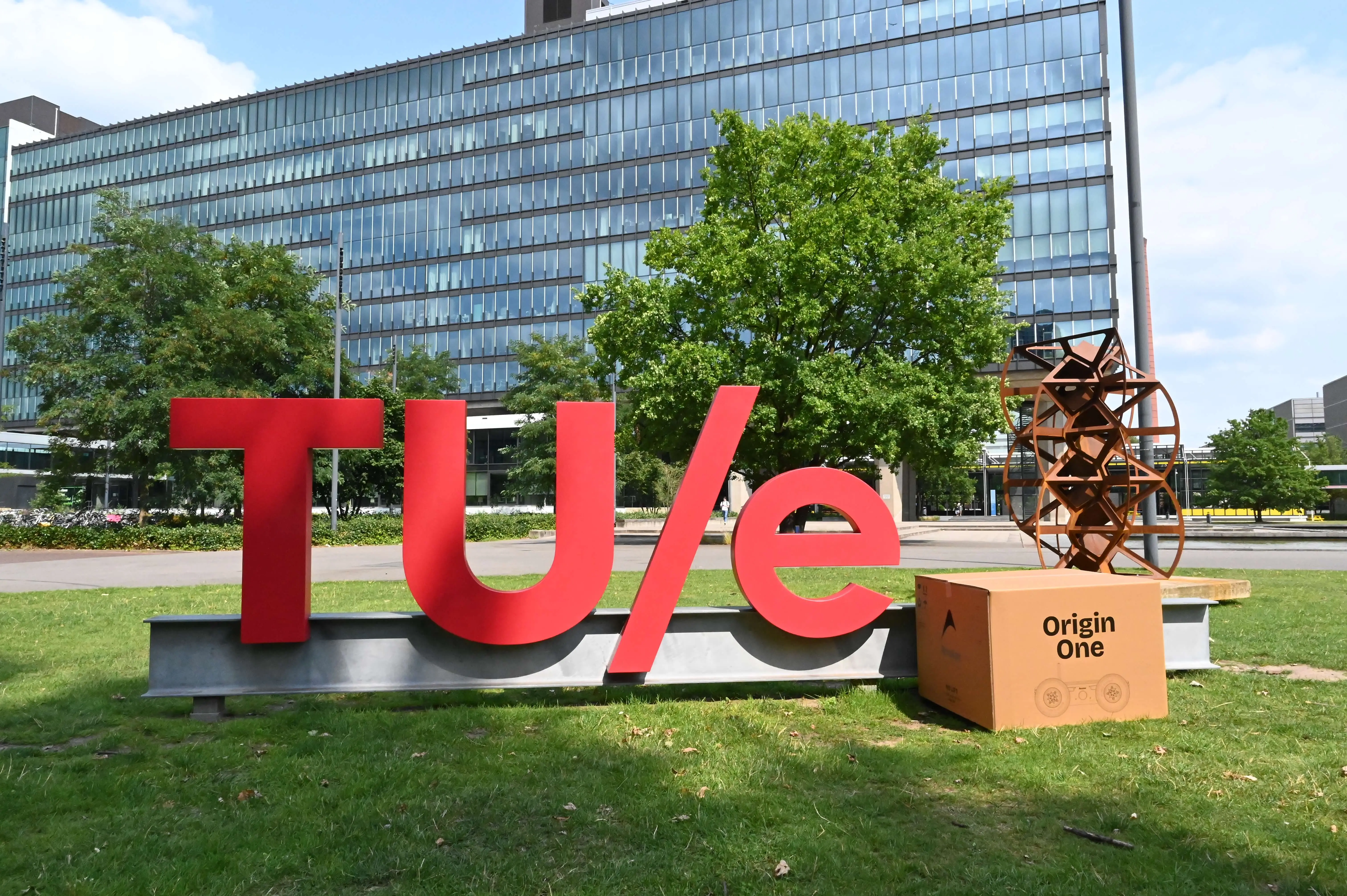
At Eindhoven University of Technology (TU/e), robotics research focuses on developing and validating new technologies for autonomous systems. This requires mobile robot platforms that are flexible, open, and easy to integrate with custom software. In daily research practice, teams need platforms that work out of the box while still allowing full control over the software stack. This enables researchers to spend their time on innovation rather than system integration.
“When testing new research results, we need mobile robots that are flexible, open, and accessible. With Avular platforms, we can focus on developing new functionality instead of building infrastructure from scratch.”
— Professor in Robotics, TU/e
A practical research platform
The Avular Origin One platforms provide TU/e researchers and students with modular, industry-ready platforms that support rapid experimentation. Its open architecture makes it easy to deploy custom software, while its robust hardware allows reliable testing in complex indoor environments.
A key benefit is the Docker-based software environment, which isolates experiments from the system itself. This allows users to test new ideas safely and restore setups quickly if needed. This setup significantly reduces onboarding time for students and researchers working on advanced projects.
“It only took two hours to move my entire thesis setup onto the Origin One platform.” — PhD student TU/e.
Supporting education, research and valorisation
TU/e’s activities are structured around three pillars: education, research, and valorisation. Avular Origin One supports each of these areas. Students use the platform to gain hands-on experience with autonomous robotics. Researchers apply it to develop and validate new mobile robotics solutions. Because the same platforms are used in industry, research results can be transferred more easily beyond the university.
From research to application
By working with Avular platforms in an academic research environment, TU/e and Avular jointly shorten the path from innovation to application. The platforms provide a flexible research foundation on which new technologies are developed, tested, and refined for specific industry use cases, shaped by both academic innovation and practical industry needs. This iterative process allows technologies to mature step by step, ultimately enabling faster adoption and meaningful impact in real-world applications.